Air Conditioning Repair in Laredo, TX
Air conditioning is a system, not a single appliance. This page takes the whole-system view — equipment, duct distribution, controls, airflow and drainage — because comfort complaints often come from how those parts interact rather than from one broken component.
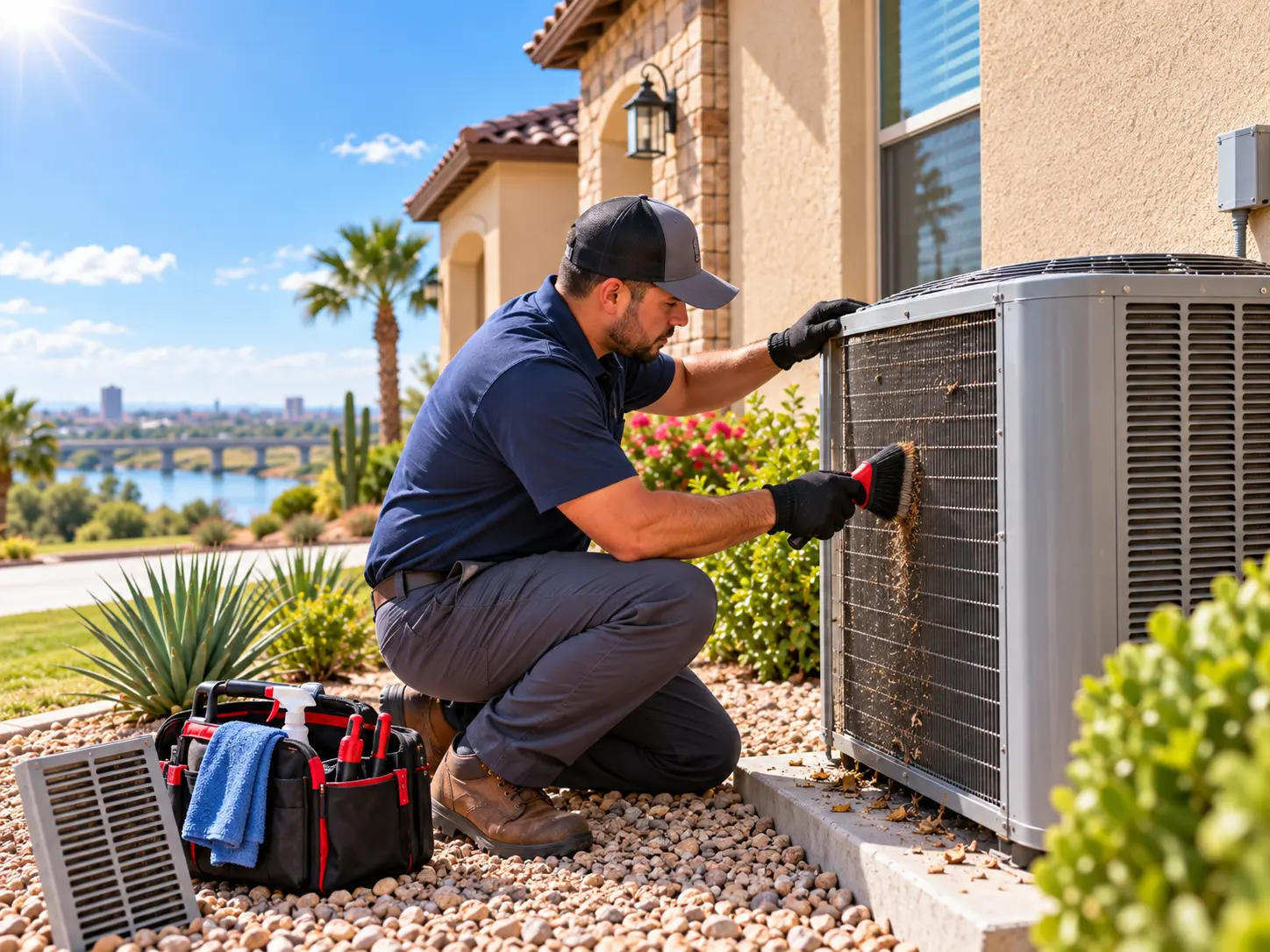
A homeowner who says "the air conditioning isn't working right" may be describing uneven room temperatures, humidity that never drops, long run times, high utility usage, noise, or a system that cannot keep up in the afternoon. None of those necessarily mean a failed part.
Whole-system repair looks at capacity, distribution and control together. That perspective matters in Laredo, where attic duct systems spend months in extreme heat and where the difference between adequate and inadequate cooling is often measured in airflow rather than equipment tonnage.
The four layers of a cooling system
Repairs that only address the equipment layer sometimes leave the complaint unresolved. A house with substantial return-side leakage in a 140-degree attic can have perfectly healthy equipment and still cool poorly in the afternoon.
- Equipment
- The condensing unit and indoor coil and blower. This is where component failures happen and where capacity is set.
- Distribution
- Supply and return ductwork, registers and grilles. Leakage, restriction and poor balance show up as uneven comfort.
- Controls
- Thermostat, sensors, control board and safety devices. Controls decide when and how long the system runs.
- Building factors
- Insulation, attic conditions, windows, sun exposure and infiltration set the load the system has to meet.
System-level symptoms and what they suggest
| Complaint | System-level factors to examine |
|---|---|
| Some rooms far warmer than others | Duct sizing and leakage, register balance, return path, sun exposure |
| House feels clammy even when cool | Run-time patterns, airflow too high for the coil, oversized equipment |
| Run time increased year over year | Coil fouling, airflow restriction, refrigerant circuit, added load |
| Never reaches setpoint in the afternoon | Capacity versus load, duct losses, condenser condition |
| Noise from vents or equipment | Duct velocity, loose components, blower or fan issues |
| Dust complaints | Return leakage, filter bypass, duct condition |
Airflow: the quiet variable
Airflow determines how effectively the equipment can do its job. Too little air across the evaporator coil reduces capacity, encourages icing and stresses the compressor. Uneven airflow between rooms produces comfort complaints that no thermostat setting can fix.
Airflow problems are also the most common thing that looks like a refrigerant issue. Before concluding that a system needs refrigerant work, filters, coil cleanliness, blower operation, duct condition and register positions all deserve a look. That order of investigation saves unnecessary work.
Humidity in a South Texas summer
Cooling removes both heat and moisture. Dehumidification depends heavily on run time and coil temperature, so a system that satisfies quickly may leave a house feeling cool but damp. Conversely, long steady run times during peak heat usually produce good moisture removal.
If a house feels clammy, look at cycling behavior and airflow settings before assuming a mechanical fault. Very short cycles, an oversized system for the load, or airflow set too high across the coil all reduce moisture removal.
When repair is the right call — and when to step back
Component repair makes sense when the system's design fundamentals are sound and one part has failed or drifted. That covers the large majority of service calls, and it is usually the most economical path.
Stepping back makes sense when the same complaint keeps returning, when several major components have failed, when duct problems are extensive, or when the equipment is old enough that parts and refrigerant availability are a factor. In those cases, a broader evaluation — including the ducts and the load, not just the box outside — gives a better answer than repeated single-part repairs.
Before you call
Safe checks and clear limits
A few quick observations often speed up a service request. Everything below stays outside the equipment cabinet.
Safe checks a homeowner can make
- Confirm the thermostat is set to COOL and the fan setting is on AUTO or ON.
- Set the thermostat several degrees below the current indoor temperature.
- Look at an accessible air filter and replace it if it is visibly loaded with dust.
- Check the breaker for the air conditioner once, and leave it alone if it trips again.
- Replace thermostat batteries if the model uses them and the screen is dim or blank.
- Make sure supply registers and return grilles are open and not blocked by furniture.
- Look for visible water around the indoor unit or in the drain pan.
- Listen for unusual sounds and note when they happen — startup, running, or shutdown.
Leave these to a professional
- Do not open energized equipment or remove electrical covers.
- Do not handle capacitors — they can hold a charge after power is removed.
- Do not bypass, jump or defeat safety devices such as float switches or limits.
- Do not loosen, tap or otherwise manipulate refrigerant lines or service ports.
- Do not repeatedly reset a breaker that keeps tripping.
If a symptom involves burning smells, smoke, sparking or standing water near electrical equipment, turn the system off at the thermostat and breaker and request service.
Questions & answers
Frequently Asked Questions
- What is the difference between air conditioner repair and air conditioning repair?
- In everyday use they mean the same thing. On this site we split them for clarity: the air conditioner repair page focuses on individual equipment components and how each one fails, while this page covers the whole cooling system — including duct distribution, controls, airflow and building load. If your complaint is a hard failure, start with equipment. If it is uneven or inadequate comfort, start here.
- Why does one room stay hot even when the AC runs constantly?
- That is usually a distribution or load issue rather than an equipment failure. Common contributors include a duct run that is too small, disconnected or crushed, leakage into the attic, a closed damper, no adequate return path from the room, and high heat gain from windows or poor insulation. Measuring airflow at the register and inspecting the duct run for that room is the practical starting point.
- Can duct problems make my whole system underperform?
- Yes. Supply leaks dump conditioned air into unconditioned space, and return leaks pull hot attic air into the system. In a Laredo attic during summer, both are significant. Duct issues can also restrict total airflow, which reduces capacity and increases the chance of coil icing. That is why duct evaluation belongs in any conversation about a system that cannot keep up.
- Does closing vents in unused rooms help?
- Usually not. Closing registers raises static pressure and reduces total airflow, which can lower capacity and stress the blower. On most residential systems, leaving registers open and balancing airflow properly works better. If certain rooms consistently need less air, adjusting the system's balance rather than shutting registers is the more reliable approach.
- Why is my electricity usage higher than last summer with no other changes?
- Rising run time is the usual explanation, and run time rises when capacity drops or load increases. Coil fouling, restricted airflow, a developing refrigerant-circuit issue, duct leakage that worsened, or simply a hotter stretch of weather all raise consumption. A performance check that includes coil condition, airflow and temperature split can identify whether something is drifting.
- How often should a cooling system be inspected in this climate?
- Because cooling seasons here are long, many homeowners have their system checked before the heat sets in and keep filters on a tighter schedule than the packaging suggests. The value is not the inspection itself but catching airflow restriction, coil fouling and drain problems before they turn into a no-cool call in August.
Need Help With Your AC?
Describe what your air conditioner is doing and request service for your Laredo-area property.
(956) 663-3737