Ductwork Repair in Laredo, TX
Ducts deliver whatever cooling the equipment produces. When they leak into a hot attic, restrict airflow or lack adequate return capacity, a healthy air conditioner still cannot keep a house comfortable.
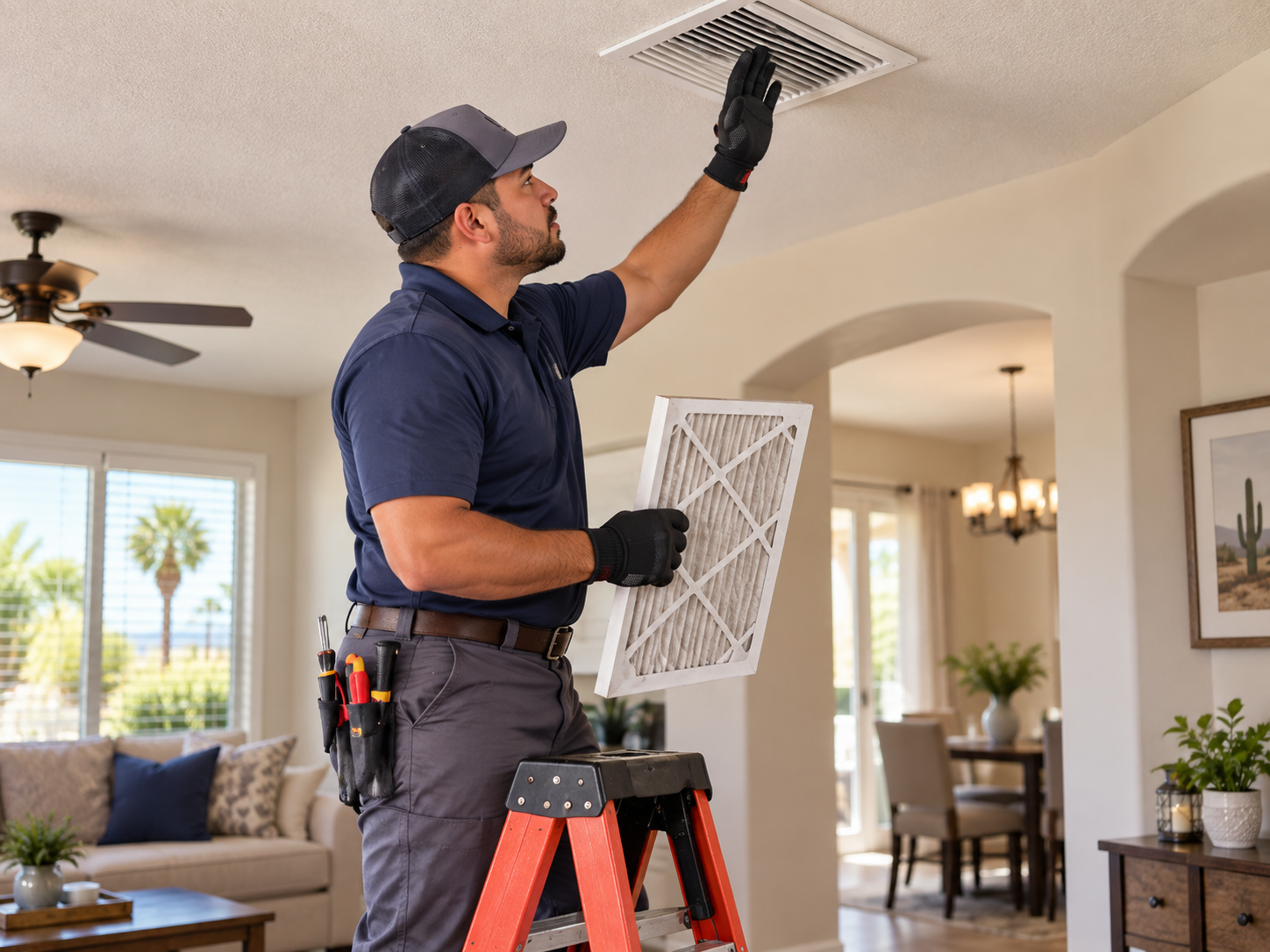
Duct problems are easy to overlook because the equipment appears to be working. The compressor runs, the blower runs, cold air comes out somewhere — but the house does not hold temperature and certain rooms never catch up.
In Laredo the stakes are higher than in mild climates. Attic temperatures during summer can far exceed outdoor air, so a leaking supply duct is dumping cooled air into an oven, and a leaking return is pulling that oven's air into the system.
Signs of duct problems
- Rooms that stay several degrees warmer than the rest of the house.
- Weak airflow at some registers even with a clean filter.
- High run times and rising energy use without any equipment change.
- Dust that keeps returning shortly after cleaning.
- Whistling or roaring noise at registers or near the air handler.
- Air that feels barely cool at distant registers but cold near the unit.
- Visible disconnected, crushed or sagging flex duct in the attic.
What goes wrong with duct systems
- Leakage
- Failed tape, loose connections at boots and plenums, and torn flex duct let conditioned air escape and hot attic air in.
- Undersized runs
- A branch too small for the room it serves cannot deliver enough air regardless of equipment capacity.
- Crushed or kinked flex
- Sharp bends, compression from stored items or sagging between supports restrict flow substantially.
- Inadequate return
- Too little return capacity raises static pressure, lowers airflow and reduces system capacity.
- Poor insulation
- Thin or damaged duct insulation in a very hot attic allows significant temperature gain before air reaches the room.
- Damper and balance issues
- Closed or misadjusted dampers send too much air to some rooms and too little to others.
How duct evaluation works
Evaluation starts with the symptom pattern: which rooms, at what times of day, and how the airflow compares between registers. From there a technician inspects accessible duct runs, connections, insulation condition and the return path, and looks at airflow and static pressure at the equipment.
The goal is identifying whether the complaint comes from leakage, restriction, sizing, insulation or balance — because the correction is different for each. Sealing a leak does not fix an undersized run, and adding a return does not fix crushed flex.
Typical corrections
- Sealing connections at plenums, boots and joints with appropriate mastic or approved products.
- Replacing torn, crushed or badly sagging flex duct sections and correcting support.
- Adding or enlarging return air capacity where static pressure is too high.
- Repairing or upgrading duct insulation in attic spaces.
- Resizing branch runs that cannot serve their rooms.
- Adjusting dampers and rebalancing airflow between zones and rooms.
Before you call
Safe checks and clear limits
A few quick observations often speed up a service request. Everything below stays outside the equipment cabinet.
Safe checks a homeowner can make
- Confirm the thermostat is set to COOL and the fan setting is on AUTO or ON.
- Set the thermostat several degrees below the current indoor temperature.
- Look at an accessible air filter and replace it if it is visibly loaded with dust.
- Check the breaker for the air conditioner once, and leave it alone if it trips again.
- Replace thermostat batteries if the model uses them and the screen is dim or blank.
- Make sure supply registers and return grilles are open and not blocked by furniture.
- Look for visible water around the indoor unit or in the drain pan.
- Listen for unusual sounds and note when they happen — startup, running, or shutdown.
Leave these to a professional
- Do not open energized equipment or remove electrical covers.
- Do not handle capacitors — they can hold a charge after power is removed.
- Do not bypass, jump or defeat safety devices such as float switches or limits.
- Do not loosen, tap or otherwise manipulate refrigerant lines or service ports.
- Do not repeatedly reset a breaker that keeps tripping.
If a symptom involves burning smells, smoke, sparking or standing water near electrical equipment, turn the system off at the thermostat and breaker and request service.
Questions & answers
Frequently Asked Questions
- What causes weak airflow from AC vents?
- The most common causes are a loaded filter, blocked or closed registers, a restricted or crushed duct run, inadequate return capacity, a fouled evaporator coil, or a blower problem. Start with the filter and registers since those are homeowner checks. If airflow is still weak with a clean filter and open registers, the duct system and blower need evaluation.
- How much cooling can duct leaks actually cost?
- Enough to change how a house feels. Leakage in unconditioned attic space is doubly costly here because supply leaks lose cooled air while return leaks introduce extremely hot air into the system. Substantial leakage can leave a house unable to reach setpoint in the afternoon even with equipment that tests fine, which is why duct condition belongs in any capacity conversation.
- Should I have my ducts cleaned or sealed?
- They address different problems. Sealing addresses leakage that costs capacity and energy — that is a performance issue. Cleaning addresses accumulated debris and is more of an air-quality consideration, and it does not improve leakage or sizing. If the complaint is comfort or high run time, sealing and airflow work is the relevant path.
- Can duct problems cause my coil to freeze?
- Yes. Anything that restricts total airflow across the evaporator coil can drop coil temperature far enough for ice to form, and restrictive ductwork or inadequate return capacity does exactly that. Once ice forms, airflow drops further and the problem compounds. Correcting the restriction is what prevents recurrence — thawing alone is temporary.
- Is duct repair worth doing on an older system?
- Often yes, because the ducts usually outlive the equipment and any future replacement will connect to them. Correcting leakage, restriction and insulation problems improves comfort now and protects the performance of whatever equipment comes next. It is one of the few improvements that carries forward.
Need Help With Your AC?
Describe what your air conditioner is doing and request service for your Laredo-area property.
(956) 663-3737