
Mini Split Repair in Laredo, TX
Ductless mini splits are common in additions, converted garages, casitas, offices and rooms that central ductwork never served well. They fail differently from central systems, and their maintenance needs are different too.
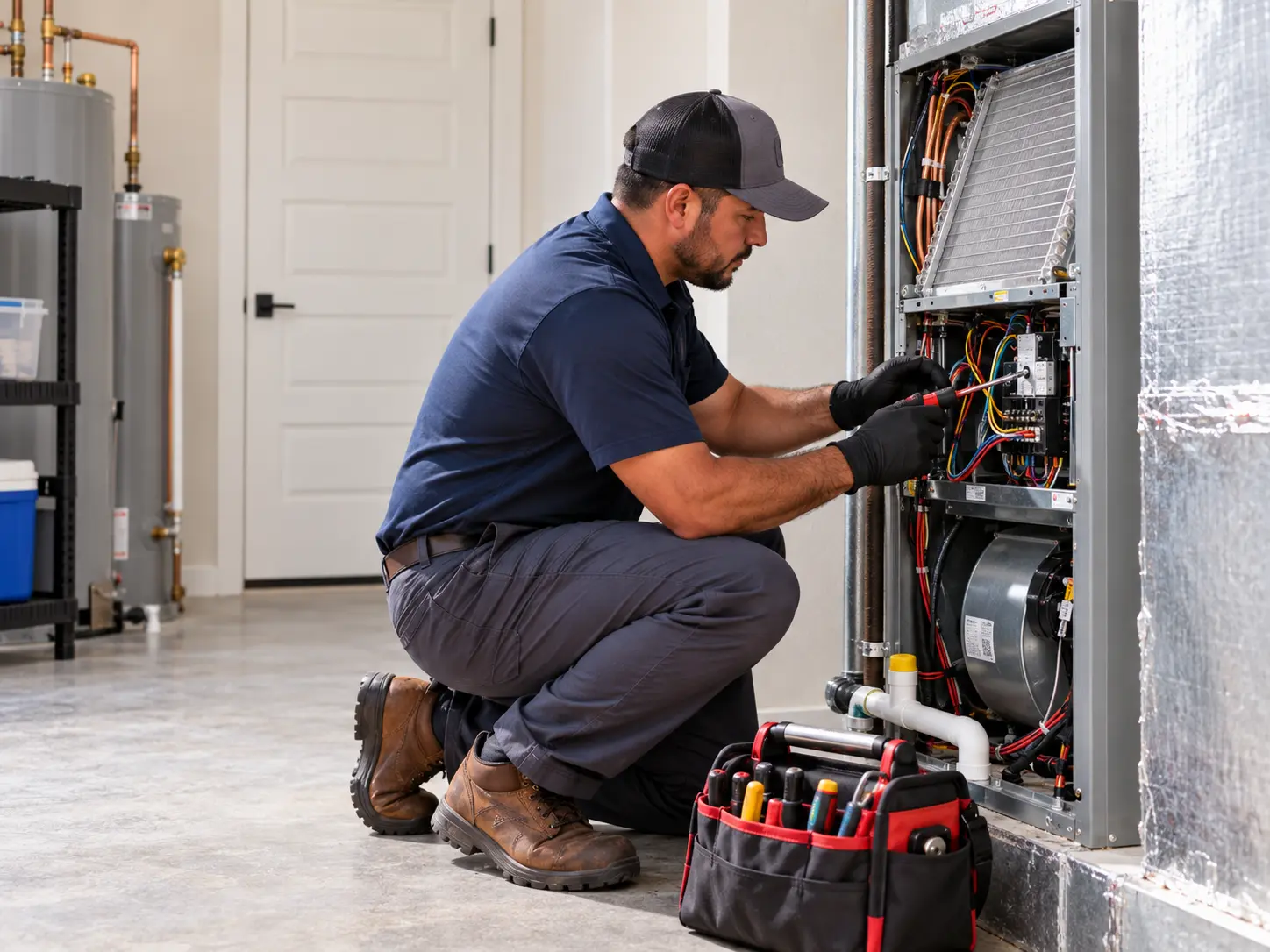
A mini split pairs one or more wall, ceiling or floor indoor units with an outdoor condenser. Because the indoor unit sits in the room it conditions, small problems — a dirty filter screen, a partially blocked drain, a fouled blower wheel — become noticeable quickly.
Most mini splits also use inverter-driven compressors and communicate faults through blinking indicator lights or error codes, which gives a technician a useful starting point.
Common mini split symptoms
- Weak or no cooling
- Often filter screens or a fouled blower wheel restricting airflow, a fan issue, or a refrigerant-circuit problem.
- Blinking indicator light or error code
- The unit is reporting a specific fault — sensor, communication, pressure or electrical. The code narrows the investigation substantially.
- Water dripping from the indoor unit
- Usually a blocked condensate drain or a condensate pump issue. Mini split drains rely on slope or a pump and clog easily.
- Musty odor when running
- Biological growth on the blower wheel and coil is common in humid climates and needs proper cleaning, not just filter replacement.
- Unit runs but the outdoor fan does not
- Electrical or control issue at the outdoor unit, or a protective shutdown.
- Remote or controls unresponsive
- Batteries, receiver issues, or a control-board fault.
Homeowner maintenance that genuinely matters
Filter screens are the single highest-value task on a mini split. They load faster than most people expect, and a restricted screen reduces cooling and encourages moisture problems on the coil.
- Remove and rinse the washable filter screens in each indoor head regularly — every few weeks during heavy use.
- Let filters dry fully before reinstalling.
- Keep the area in front of each indoor unit clear so airflow is not deflected.
- Watch for water staining on the wall below the indoor unit and report it early.
- Keep the outdoor unit clear of vegetation and debris.
What professional service involves
Service on a ductless system typically starts with the reported error code or symptom, then moves to airflow, coil and blower-wheel condition, drainage, electrical checks at both units, and communication between indoor and outdoor components.
Deep cleaning of the indoor blower wheel and coil is a common and worthwhile service on units that have run for several humid seasons. It requires proper protection of the wall and the electronics, which is why it is not a homeowner task.
Mini splits in Laredo conditions
Long cooling seasons and high humidity mean indoor coils stay wet for extended periods, which is exactly the condition that encourages growth and odor. Regular filter care and periodic deep cleaning make a noticeable difference.
Outdoor units in this area also collect dust and debris, and clearance matters — an outdoor unit crowded by shrubs or fencing cannot reject heat efficiently during a 100-degree afternoon.
Before you call
Safe checks and clear limits
A few quick observations often speed up a service request. Everything below stays outside the equipment cabinet.
Safe checks a homeowner can make
- Confirm the thermostat is set to COOL and the fan setting is on AUTO or ON.
- Set the thermostat several degrees below the current indoor temperature.
- Look at an accessible air filter and replace it if it is visibly loaded with dust.
- Check the breaker for the air conditioner once, and leave it alone if it trips again.
- Replace thermostat batteries if the model uses them and the screen is dim or blank.
- Make sure supply registers and return grilles are open and not blocked by furniture.
- Look for visible water around the indoor unit or in the drain pan.
- Listen for unusual sounds and note when they happen — startup, running, or shutdown.
Leave these to a professional
- Do not open energized equipment or remove electrical covers.
- Do not handle capacitors — they can hold a charge after power is removed.
- Do not bypass, jump or defeat safety devices such as float switches or limits.
- Do not loosen, tap or otherwise manipulate refrigerant lines or service ports.
- Do not repeatedly reset a breaker that keeps tripping.
If a symptom involves burning smells, smoke, sparking or standing water near electrical equipment, turn the system off at the thermostat and breaker and request service.
Questions & answers
Frequently Asked Questions
- Why is my mini split blowing weakly?
- Start with the filter screens in the indoor head. They are washable and load quickly, and a restricted screen reduces airflow noticeably. If clean screens do not help, the blower wheel may be fouled with buildup, the fan or its control may be faulty, or the refrigerant circuit may need evaluation. Blower wheel cleaning on a wall unit requires proper protection and is a technician task.
- What does a blinking light on my mini split mean?
- It is an error indication, and the pattern or code corresponds to a specific fault category — often a sensor, a communication problem between indoor and outdoor units, a pressure condition or an electrical fault. Noting the exact blink pattern or displayed code before requesting service is genuinely helpful, since it narrows the investigation immediately.
- Why is water dripping from my indoor unit?
- Mini split condensate usually drains by gravity through a small line or is moved by a condensate pump. Both clog. A partially blocked drain backs water up in the pan until it spills out the front of the unit, and a failed pump does the same. Because the unit is mounted on a wall inside the room, it is worth addressing promptly to avoid wall and flooring damage.
- Why does my mini split smell musty?
- In humid climates the indoor coil and blower wheel stay damp during cooling, which encourages biological growth. Rinsing the filter screens helps but does not reach the wheel or coil surfaces. A proper deep cleaning of the blower wheel and coil is the effective fix, and running the unit's fan-only or dry mode briefly after heavy cooling can help reduce recurrence.
- Do mini splits need annual service?
- They benefit from it, and their filter care schedule is more frequent than a central system's. Annual professional attention typically covers coil and blower condition, drainage, electrical checks and refrigerant-circuit performance. Units in dusty spaces, kitchens or heavily used rooms tend to need attention sooner.
Need Help With Your AC?
Describe what your air conditioner is doing and request service for your Laredo-area property.
(956) 663-3737